
Last updated August 28, 2026
Free in-home measure and quote - PGT, CGI and CWS impact lines compared on your actual openings, style by style


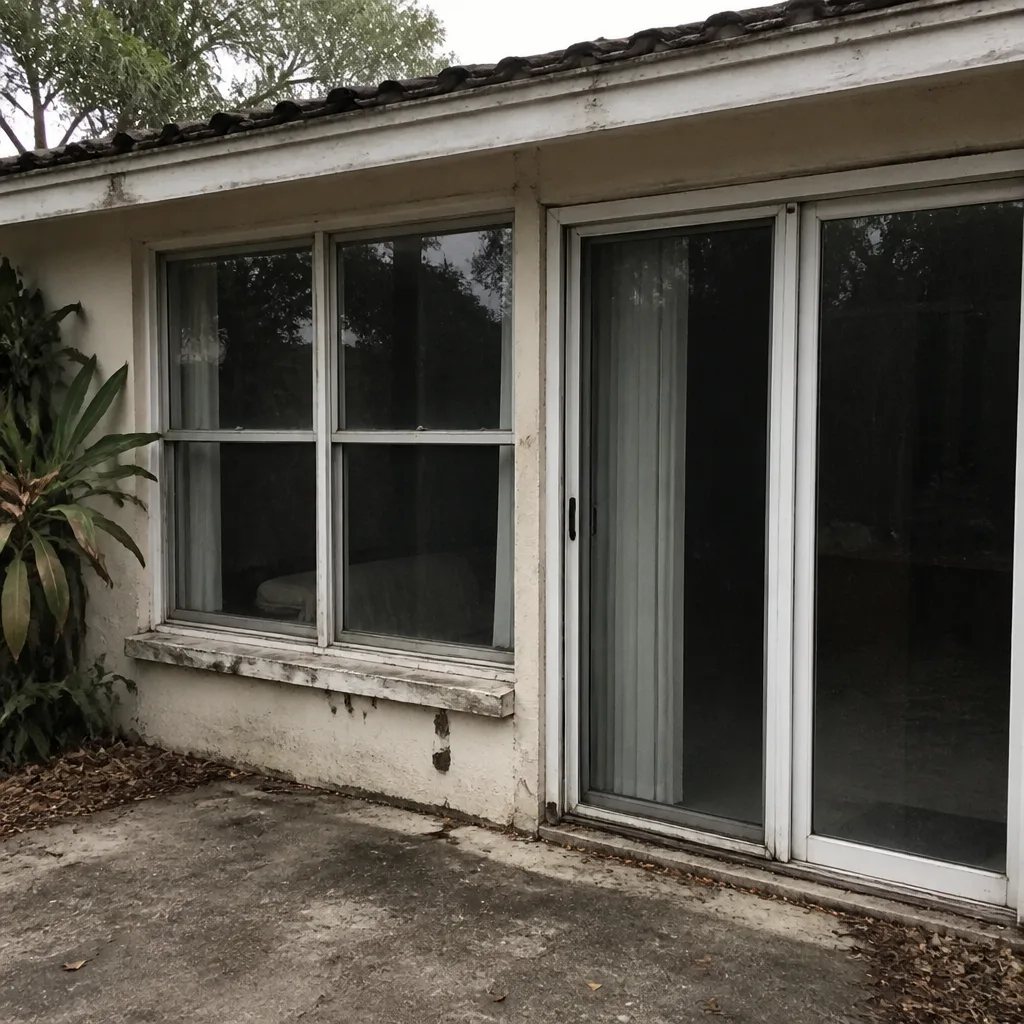 Before
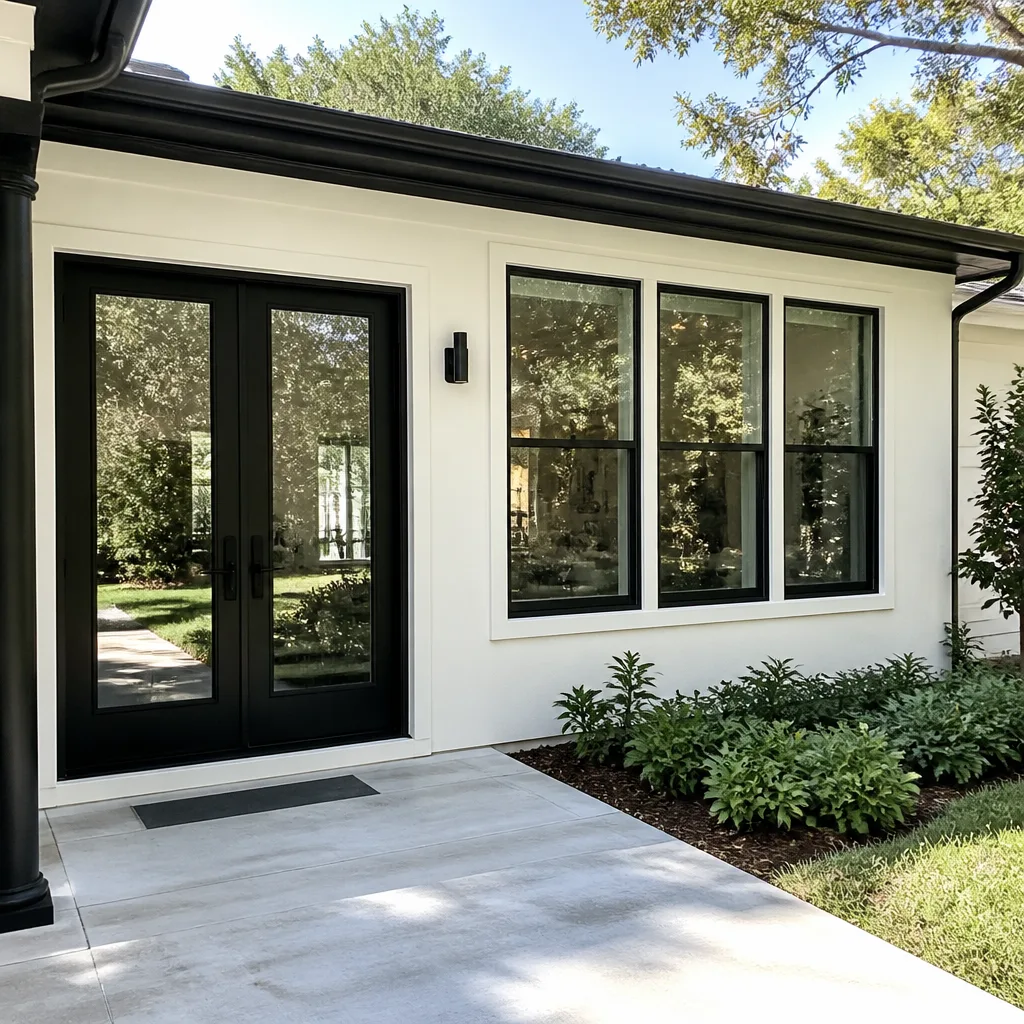 After
After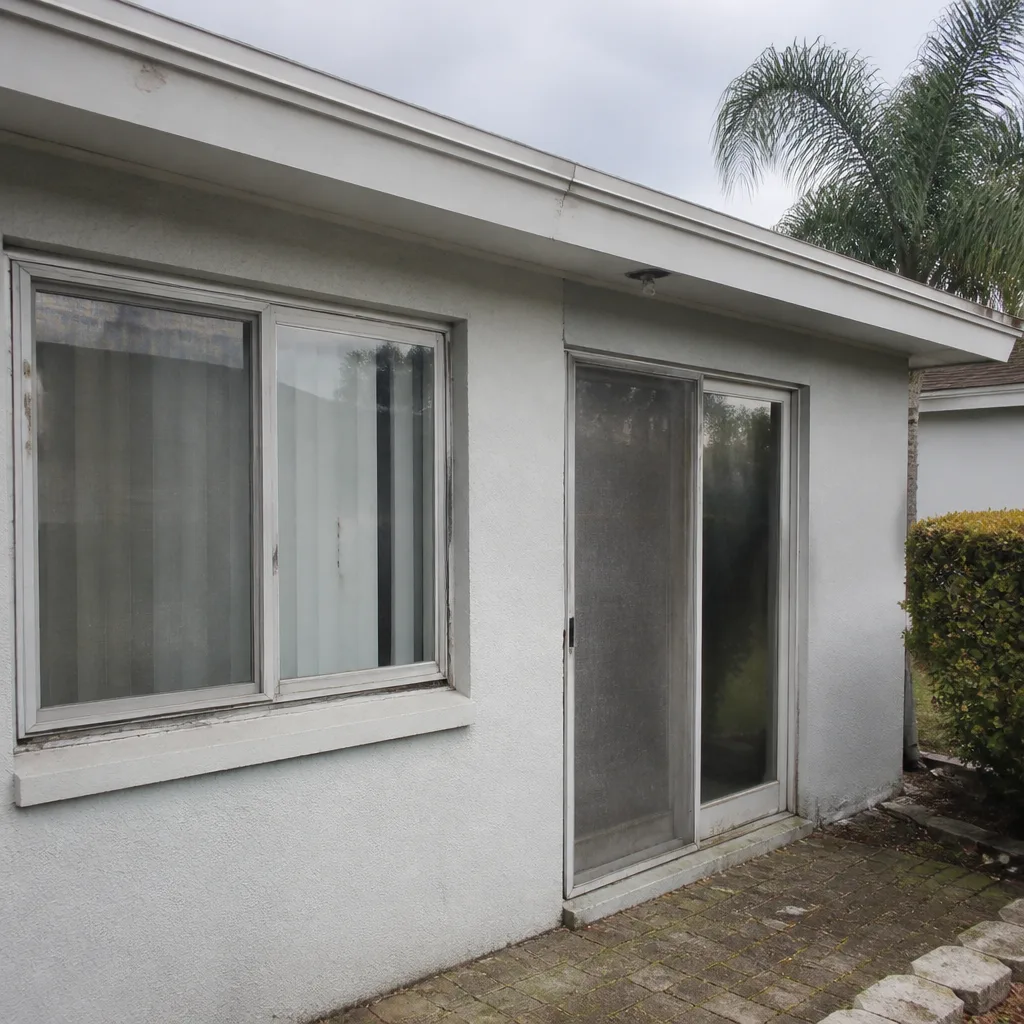 Before
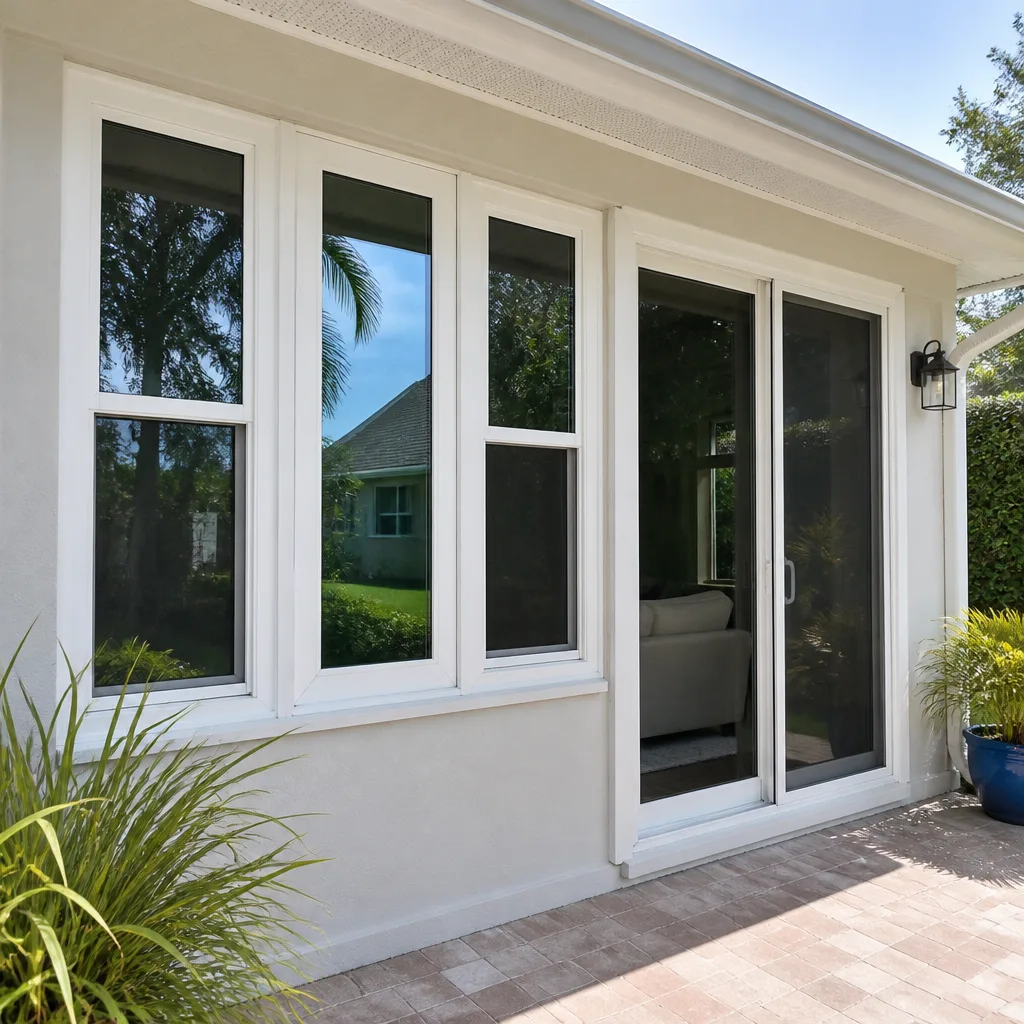 After
After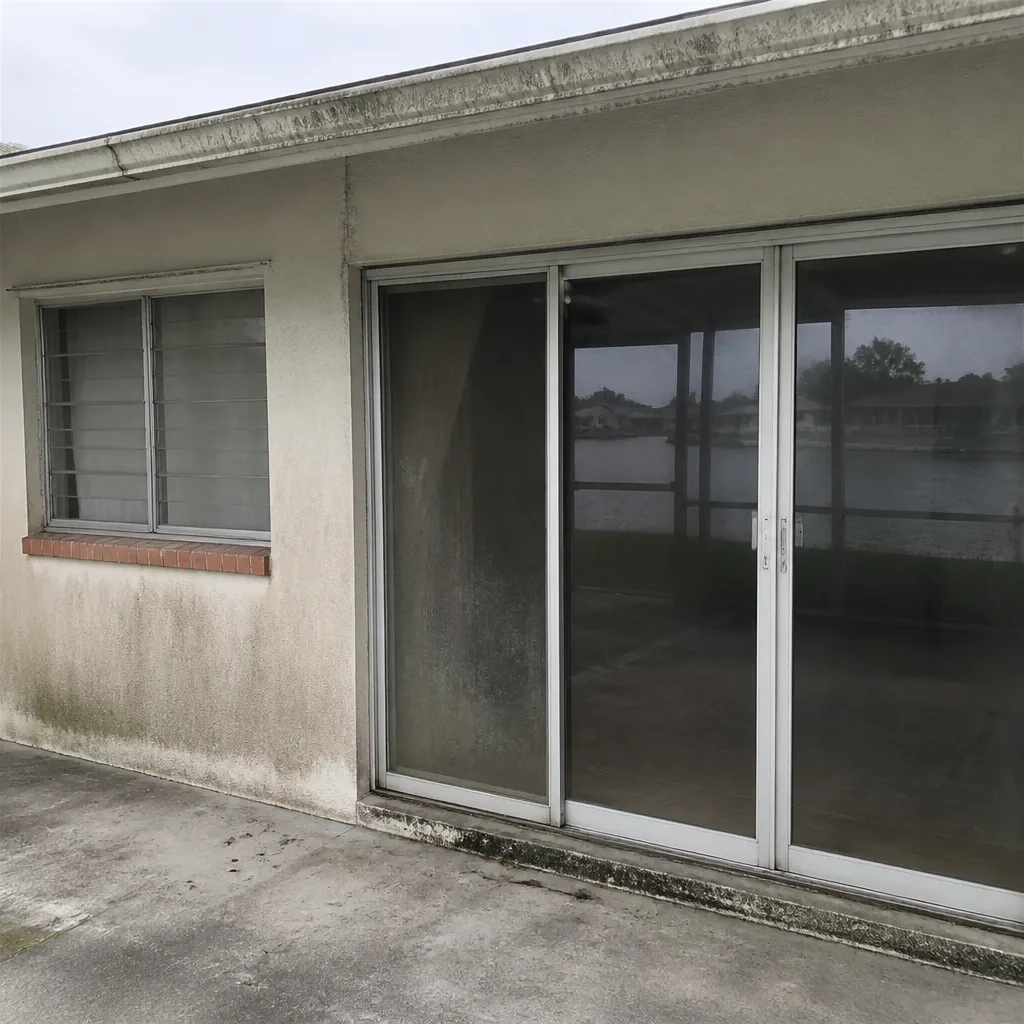 Before
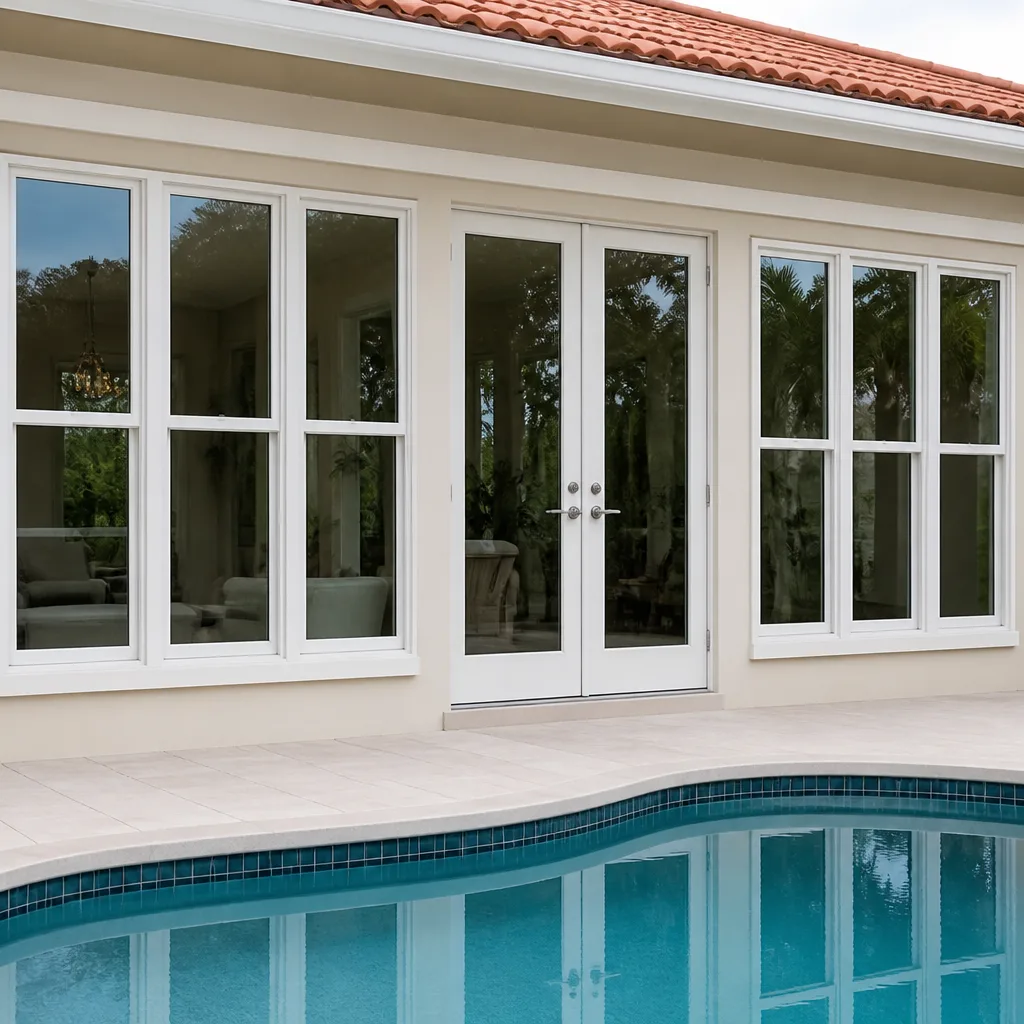 After
AfterWindows & Doors Warning Signs: A Sarasota Homeowner’s Reference Guide
Most window and door guides wait until the failure is obvious: glass on the patio, water across the sill, a door that won’t latch at all. By then, the fix is a replacement, and the bill reflects the emergency. The warning signs that matter in Sarasota show up one to three years earlier, during the window when a competent repair is still possible. They’re subtle: a sash that binds in August, a hinge that has drifted an eighth of an inch, a fog pattern that appears only on certain mornings. This guide teaches you to read those signals the way a glazier does, so you can act while the decision is still yours and the cost is still reasonable.
Quick Answer
The earliest warning signs of window and door failure in Sarasota are seasonal binding, salt-air corrosion on hardware, and morning fogging patterns that differ from normal condensation. These indicators typically appear one to three years before visible water damage, frame rot, or seal failure. A trained glazier can distinguish a repairable issue from a unit that has passed the point of economical repair, which is precisely the service TruePane Windows & Doors offers to Sarasota homeowners at no charge for the estimate.
Table of Contents
- Seasonal Binding: When a Window Fights You in August
- Condensation vs. Seal Failure: Reading the Fog Correctly
- Salt Air Corrosion: Coastal Warning Signs Most Guides Miss
- Water Infiltration Through Wall Framing: The Misdiagnosis That Costs Thousands
- Door Warning Signs: Thresholds, Strike Plates, and Hinge Mortises
- Repair, Replace, or Leave It Alone: A Decision Framework
- Common Mistakes to Avoid
- When to Call a Professional
- Frequently Asked Questions
- The Bottom Line
Seasonal Binding: When a Window Fights You in August
A window that is harder to open in August than it was in January is not experiencing normal seasonal behavior. In Sarasota, our humidity swings are not extreme enough to produce the dramatic expansion and contraction you’d see in a Midwest winter-to-summer cycle. What that August stiffness actually tells you is that the frame has absorbed moisture over repeated cycles and begun a slow deformation. The wood fibers or composite material have swollen past the point where the sash travels smoothly in its track. It’s a structural shift, not a weather quirk.
Here’s what we look for when a homeowner calls us about a sticky window:
- Track wear on one side only: If the sash rubs against the left jamb but not the right, the frame has warped asymmetrically. That’s moisture absorption, not lubrication.
- Resistance that worsens through the day: Morning stiffness that eases by afternoon suggests the frame is absorbing overnight humidity and drying during the day. Over time, this cycle deforms the frame permanently.
- Visible compression marks on the sash: If you see scuffing or compression indentations where the sash meets the jamb, the two surfaces are in contact in a way the original manufacturer never intended. That contact is abrasive and will only worsen.
- A window that “settles” closed with a thud: A sash that closes with a heavy, solid sound rather than a soft, controlled glide has shifted in its track. The balance system is now working against a misaligned frame.
The problem with waiting is that seasonal binding does not resolve itself. The frame continues to deform, the sealant between the frame and the rough opening begins to separate, and you eventually get water intrusion at the perimeter. By the time the window is stuck, the repair is more involved and more expensive than it would have been six months earlier. If you’re noticing this in a home near the water, in neighborhoods like Siesta Key or Osprey where humidity is relentless, the timeline is shorter. For a deeper look at what a proper installation involves, our guide to Window Installation in Sarasota explains how we set frames to avoid this cycle from the start.
Condensation vs. Seal Failure: Reading the Fog Correctly
Every Sarasota homeowner has seen condensation on the outside of a window on a summer morning. That’s the warm, humid outside air meeting the cool glass surface. It’s normal, it’s temporary, and it burns off by mid-morning. The fogging pattern that indicates insulated glass unit seal failure looks different, and learning to read that difference can save you from replacing a window that didn’t need replacing or, just as bad, ignoring one that did.
Normal Sarasota condensation: It appears on the outside surface only, it forms evenly across the pane, it is present on multiple windows at once, and it disappears within an hour or two of sunrise. You can wipe it away with your hand, and it will not return until the next humid morning.
Seal failure fogging: It appears between the panes of glass, not on the exterior surface. It rarely forms evenly. Instead, it shows up as a cloudy patch in one corner or along one edge, often with a visible water stain or mineral residue inside the unit. It does not wipe away because you cannot reach it. It comes and goes with temperature changes, sometimes visible in the morning, sometimes midday, sometimes not at all for days.
Here are the specific patterns that indicate a failed seal rather than Florida humidity:
- Persistent interior fog with a “washed” look: If the inside of the glass unit looks smeared or streaked even when dry, the desiccant inside the spacer has been saturated, and condensation has already left mineral deposits on the glass.
- Concave or convex distortion: A failed seal can allow the two panes to flex slightly. Look at a reflection across the glass; if it bends or distorts rather than staying straight, the seal has likely failed and the gas fill has escaped.
- Fogging at the bottom corners first: Seal failures typically begin at the corners of the unit, where the spacer is under the most stress. A fog pattern that anchors in one corner and spreads inward over weeks is a classic failure signature.
- Temperature-dependent visibility: If the fog appears mainly on cool mornings after warm afternoons, that’s the gas inside the unit expanding and contracting, drawing in moist air through the failed seal.
In our experience, this is the single most common misdiagnosis we correct in Sarasota. Homeowners replace a perfectly functional window with healthy exterior condensation, or they live with a failed unit for years because they assume the morning fog is normal. If you’re looking at a window and you’re not sure, a glazier can identify the failure in minutes. For homeowners considering a replacement, our Window Replacement in Sarasota guide covers what a proper replacement involves and how to evaluate your options.
Salt Air Corrosion: Coastal Warning Signs Most Guides Miss
If you live on a barrier island or within a mile or two of the Gulf, your windows and doors are aging in an environment that inland hardware was never designed to survive. Salt air attacks the metals in your window and door hardware continuously, and the earliest signs are so small that most homeowners overlook them until something fails outright. In Sarasota, properties on Siesta Key, Lido Key, Longboat Key, and along the coastal mainland corridor all contend with this.
Early-stage salt corrosion looks like: A white or chalky powder forming on the visible edges of metal hardware - the bottom corners of hinges, the heads of screws on the latch plate, the ends of the operator arms on casement windows. The metal still functions normally, but the powder is the first sign that the protective finish has been breached. You may also see tiny pits or speckling on aluminum frame corners where the anodized finish has been compromised.
Late-stage salt corrosion looks like: Flaking metal, rust-colored staining running down from the hardware, screws that have swollen or fused to the surrounding material, and hardware that grinds or feels gritty when operated. At this stage, the structural integrity of the component is gone. A latch that flakes apart is not far from a latch that fails, and a latch failure on an exterior door is both a security and a weather-sealing problem.
What to check on coastal Sarasota properties:
- Casement window operator arms: These are the mechanical linkages that open and close the window. They’re exposed to the elements and rarely lubricated. Salt corrosion here causes the operator to bind and eventually strip its gears.
- Sliding door tracks: The lower track of a slider is a natural collection point for salt-laden water. Early corrosion appears as pitting or light rust in the track channel. If you feel resistance or a grinding sensation when sliding the door, inspect the track immediately.
- Frame corners on aluminum windows: The corners are where the frame sections join and where water can pool. Salt corrosion at these joints shows up as white blooms or bubbling under the paint or finish.
- Hinge pins on exterior doors: Salt air works into the hinge barrels. Early signs are a darkening or grayish film on the pin head. Late signs are squeaking that persists after lubrication, which means the metal surfaces are pitted.
Coastal homeowners should inspect hardware twice a year, ideally once before the rainy season and once after. The good news is that early-stage corrosion often responds to cleaning and treatment. Late-stage corrosion means hardware replacement, and sometimes the surrounding frame has been compromised as well. For homes requiring impact-rated protection, our Impact Windows in Sarasota guide explains how coastal replacement and hardening work in practice.
Water Infiltration Through Wall Framing: The Misdiagnosis That Costs Thousands
Here’s a scenario we see often in Sarasota, and it’s one of the most expensive mistakes a homeowner can make. You notice a water stain on the drywall below a window or alongside a door. You assume the window or door is leaking, so you replace it. The stain returns. The leak was never in the window or door at all. The water is moving through the wall framing and entering the conditioned space at the point of least resistance, which happens to be the window or door opening. Replacing the unit didn’t fix anything because the unit was never the problem.
The difference between water moving through the window itself and water moving through the wall around it is detectable if you know what to look for:
- Water that appears away from the glass: If the stain or moisture shows up on the drywall several inches away from the window or door frame, the water is entering the wall cavity and migrating before it becomes visible. Leaks in the window itself tend to show at the sill or immediately adjacent to the frame.
- Moisture that persists after the window or door is replaced: This is the definitive sign. If you’ve replaced a unit and the staining has returned in the same place, the leak is in the flashing, the house wrap, or the stucco/veneer, not the window or door.
- Visible water when it hasn’t rained: If you see moisture at a window or door on a dry day, the water is coming from a source other than weather-driven rain - possibly plumbing, air conditioning condensation, or water trapped in the wall cavity from a previous event.
- Peeling paint or bubbling drywall above the window head: Water finding the top of the window opening and running down the interior surface suggests the leak is above the window, not in it. That points to fascia, roof flashing, or a wall penetration higher up.
The reason this misdiagnosis happens so often is that water is patient. It enters a wall cavity through a failed piece of flashing, a nail hole, or a crack in the stucco, and it runs along framing members until it finds the gap where a window or door interrupts the structure. That opening is a natural exit point. The fix is to trace the water to its actual entry point, which typically requires removing the interior drywall around the opening to see where the moisture is coming from. We do this work in Sarasota regularly, and the number of times the window itself is the culprit is lower than most homeowners would expect. If you’re considering a replacement based on water staining, get the leak diagnosed before you spend money on a unit the wall doesn’t need. For an overview of how we approach the full installation and replacement process, see our TruePane Windows & Doors home page for the scope of services we provide.
Door Warning Signs: Thresholds, Strike Plates, and Hinge Mortises
Windows get most of the attention in these guides, but the door-specific warning signs are often the ones that lead to security problems and energy loss more quickly. In Sarasota, where exterior doors face continuous humidity, occasional storm-driven rain, and the normal settling of slab foundations, there are three failure modes worth watching for long before a door refuses to latch.
Threshold Compression Failure
The threshold is the raised strip at the bottom of the door frame that the door closes against. It has a rubber or vinyl seal that compresses when the door closes to create a weather-tight barrier. In Sarasota’s humidity, that seal material degrades, but the more serious problem is compression set - the seal loses its ability to spring back after being compressed for years. The result is a gap under the door that you can feel as a draft or see as daylight. The threshold itself may also crack or sag if the underlying support has rotted, which is common in coastal properties where salt air accelerates wood deterioration. If you can see daylight under a closed exterior door, the threshold has failed and the door is no longer sealing against weather or insects.
Strike Plate Drift
The strike plate is the metal plate on the door frame that the latch bolt engages when the door closes. Over time, as the door frame subtly shifts and the house settles, the strike plate and the latch bolt fall out of alignment. The first sign is a door that latches only when you pull it firmly or lift the handle slightly. The second sign is a visible gap between the latch bolt and the edge of the strike plate opening - the bolt is not seating cleanly into the plate. In a coastal environment like Sarasota, this misalignment also means the weatherstripping is not compressing evenly, so the door is leaking conditioned air even when it does latch. The fix is usually straightforward: reposition the strike plate or adjust the hinges. Ignoring it means the door will eventually fail to latch at all, and the frame will be stressed in ways that make the eventual repair more involved.
Hinge Mortise Separation
The hinge mortise is the recessed area in the door frame and the door edge where the hinge leaf sits flush. When a door begins to sag or the wood around the mortise absorbs enough moisture to soften, the hinge screws lose their purchase and the leaf begins to pull away from the mortise. You can see this as a slight gap between the hinge leaf and the frame. You can feel it as a door that drops slightly when opened, or that requires a lift to close. Early intervention means tightening or replacing the screws before the screw holes are stripped and the mortise itself is wallowed out. Late-stage separation requires filling the mortise with wood repair material and re-cutting the recess, which is a more involved repair. On doors that face the prevailing weather, the difference between an early visit and a late one is often the difference between a screw replacement and a frame rebuild.
Repair, Replace, or Leave It Alone: A Decision Framework
Not every warning sign means you need a new window or door, and replacing units that could have been repaired is a common mistake in Sarasota. Here’s the framework we use when we evaluate a window or door, and it’s one any homeowner can apply.
Appropriate for a homeowner repair:
- Lubricating tracks, hinges, and operator mechanisms with a silicone-based lubricant.
- Tightening loose screws on hinge plates, strike plates, and latch assemblies.
- Cleaning early-stage salt corrosion from hardware with a mild detergent and a soft brush.
- Replacing a worn rubber threshold seal on a door that otherwise closes cleanly.
Requires a qualified glazier:
- Insulated glass unit replacement for a failed seal - removing the old unit, preparing the sash, and setting the new unit requires specialized tools and knowledge of the manufacturer’s installation specifications.
- Re-cutting or repairing a wallowed-out hinge mortise on an exterior door.
- Addressing seasonal binding that results from frame deformation, not simple lubrication.
- Diagnosing water infiltration when the entry point is not immediately visible.
Passed the point of economical repair:
- Frame rot that has progressed beyond the bottom corner and into the structural jambs.
- Hinge mortises so degraded that the door frame cannot hold screws reliably.
- Windows where the frame deformation causes permanent contact between the sash and jamb, and the unit is more than 20 years old.
- Single-pane windows in a coastal Sarasota home where salt air has pitted the frame beyond refinishing and the homeowner wants impact protection.
The economic test is straightforward: if the cost to repair approaches 50% of the cost to replace with a unit that will last 20 or more years, replacement is the better money. In Sarasota, where energy efficiency and impact protection add value beyond simple function, the case for replacement is often stronger than in other markets. For a detailed look at the replacement process and your options, our Window Replacement in Sarasota guide walks you through it step by step.
Common Mistakes to Avoid
- Assuming August stiffness is normal: In Sarasota, a window that binds in August is showing you structural frame deformation, not seasonal behavior. Waiting until it sticks permanently means the repair is now a replacement.
- Replacing a window because of exterior condensation: If the fog is on the outside surface and burns off by mid-morning, the window is working as designed. You don’t need a new one. You need a glazier to explain the difference before you spend thousands.
- Ignoring a door that needs a lift to latch: The lift is compensating for strike plate drift or hinge sag. Ignoring it for a year means the frame has been stressed, the weatherstripping has been leaking, and the repair is now more involved.
- Treating a wall leak by replacing the window: If the water is moving through the wall framing, a new window will not stop it. Diagnose the actual entry point first, then decide what to replace.
- Letting early-stage salt corrosion go untreated: The chalky powder on coastal hardware is a warning. Clean and treat it now, and the hardware may have years of life left. Ignore it, and the component will fail, often at the worst possible time.
- Accepting a low bid without understanding why it’s low: In Sarasota, the cheapest window or door installation is often the one that skips flashing, uses bargain sealant, or cuts corners on warranty registration. The Keystone Standard at TruePane exists because out-of-true installs and voided warranties were problems worth fixing permanently.
When to Call a Professional
Call a glazier when you can’t identify the cause of a warning sign, when a security-critical component is involved, or when you’ve already made one repair attempt that didn’t resolve the issue. A window that binds, a door that won’t latch, or water that appears with no clear source are all signals that a trained eye is worth the visit. In Sarasota, where the environment accelerates every failure mode described here, early intervention is almost always cheaper than waiting. TruePane Windows & Doors offers free estimates in Sarasota - call (941) 214-2069, and we’ll send a background-checked, uniformed technician who measures every opening twice and quotes manufacturer lines side by side on paper.
Frequently Asked Questions
Window repair in Sarasota typically ranges from $120 to $850 depending on the nature of the failure. Hardware replacement, track lubrication, and strike plate adjustments sit at the lower end. Insulated glass unit replacement for a failed seal runs higher, particularly for larger or custom-sized units. Coastal properties with impact-rated glass command a premium because the glass and frame specifications are more demanding. Call (941) 214-2069 for an exact quote - estimates are free, and you’ll see the numbers on paper before you commit.
No, and that’s written into how we work. TruePane operates on no-hassle upfront pricing with no surprise line items on the bill. The price we quote is the price you pay unless you ask us to add work beyond the original scope. We register both manufacturer warranty layers in writing before the truck leaves the driveway, so the paperwork matches the work.
Impact windows are valuable across all of Sarasota, not just the coastal barrier islands. Florida building code requires impact protection for homes in designated wind-borne debris regions, which includes much of Sarasota County. Even where impact protection isn’t code-required, the insurance premium savings and the security benefit make impact windows worth evaluating. Our Impact Windows in Sarasota guide covers the decision in detail.
Most window replacement projects in Sarasota are completed in one to three days on site, depending on the number of windows and the condition of the existing frames. A single window replacement is usually completed in a single visit. We’ll tell you the expected timeline when we provide the estimate, and we’ll be there when we say.
Some tasks - lubricating tracks, tightening screws, cleaning early salt corrosion - are appropriate for a careful homeowner. Anything involving the insulated glass unit, the frame structure, or the sealant system should be left to a qualified glazier. Improper handling of a glass unit can damage the seal, and a warranty voided by a DIY repair is a costly lesson. If you’re uncertain, call (941) 214-2069 and we’ll tell you whether the work is within homeowner scope or whether it needs a professional.
The 90-Day Done Right Promise is our guarantee that if the work isn’t done right, we make it right - no paperwork, no arguing, no fine print that covers neither. It’s backed by The Keystone Standard, which means both manufacturer warranty layers are registered in writing and their durations stated before we leave your driveway. If the pane is not true, the job is not done.
The Bottom Line
Windows and doors in Sarasota fail slowly, and the earliest warning signs - seasonal binding, salt-air corrosion, corner fogging, a door that needs a lift to latch - are subtle enough that most homeowners miss them until the repair becomes a replacement. Learning to read those signs gives you time to act when the cost is still reasonable and the decision is still yours. When a warning sign appears, treat it as a signal to investigate, not an invitation to panic. A trained glazier can identify the problem, tell you whether repair or replacement is the better money, and put the numbers on paper before you commit. That’s the service TruePane has provided Sarasota for over 42 years, and it’s the standard Dale Kessler keeps on the whiteboard: if the pane is not true, the job is not done.
Written by Dale Kessler, Owner at TruePane Windows & Doors, serving Sarasota since 2008.
Six Reasons Homeowners Choose TruePane Windows & Doors
Impact systems engineered to design pressures up to +/-100, matched to your wind zone - your openings hold when the storm arrives.
Low-E insulated impact glass from our manufacturer lines commonly cuts monthly cooling bills 20-30%.
Laminated impact glass shuts out up to 40% of outside noise - traffic, neighbors, weather.
Monitoring services run $30-90 a month. Laminated impact glass resists forced entry around the clock, with no subscription.
Florida homeowners average around 25% savings on the windstorm portion of their policy after protecting every opening - some homes qualify for more.
A full impact package upgrades curb appeal, buyer confidence and appraised value in one project.